


.svg)
Text Scripts

This call script is designed to establish credibility without bragging. You reference results to create confidence, then immediately shift the spotlight off the numbers and onto strategy. By naming specific tactics, you differentiate yourself from generic agents while keeping the focus on buyer behavior. The “last outreach” line adds respect and scarcity without pressure. The purpose of this call is to clearly position you as the professional with a plan, and then let the seller decide if they want access to it.

This call script is designed to use story as proof. Instead of leading with claims, you let a real example do the work and invite the seller to see themselves in it. That question - did this sound familiar? - creates self-recognition, which is far more powerful than persuasion. By offering specific ideas regardless of the outcome, you position yourself as generous and confident in your process.

This call script is designed to steady the seller when everything else is loud. You acknowledge the headlines first, which lowers anxiety and shows awareness, then calmly separate media fear from market reality. By reframing the failed listing as a marketing and exposure issue - not a demand problem - you restore confidence without arguing optimism. The close respects their timing, which keeps you positioned as a guide, not a persuader. The goal here is simple: reduce uncertainty, build trust, and stay top of mind until they’re ready to move forward.

This call script is designed to reframe pricing without triggering defensiveness. You normalize their original pricing decision, then introduce timing and buyer behavior to explain why small misalignments early on have outsized consequences. The insight about first-week interest shifts the conversation from opinion to logic, which builds trust fast. From there, you move to possibility - showing that a smart relaunch can still win - before offering help in a low-pressure way. The goal isn’t to debate price; it’s to reset the frame and open the door to a better strategy.

This call script is designed to anchor the conversation to the letter and shift the seller from emotion into reflection. You’re inviting them to articulate where things broke down. By reinforcing the three leverage points, you reframe the failure as a strategy issue, not a personal one.

This call script is designed to lower resistance first. Lead with empathy and validate their experience. Data shows sellers are far more open once they feel understood - and far less likely to shut down when you ask permission instead of pushing advice.
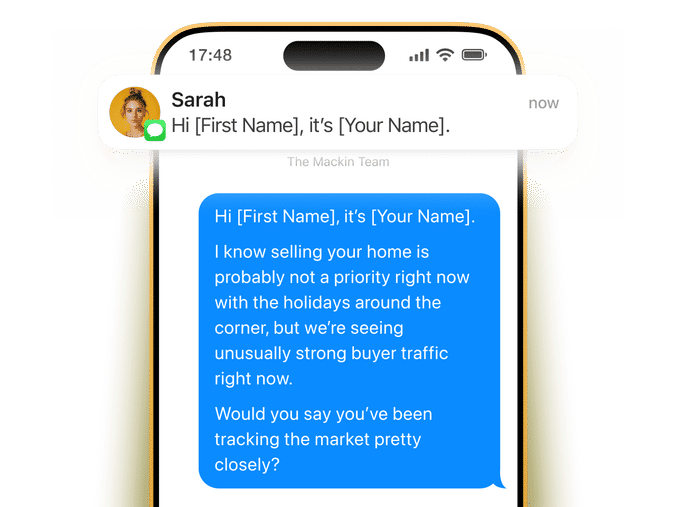
There’s one thing you can never afford to skip in a sales script: destroying the objection in the consumer’s mind. And right now, this one might sound familiar: “Selling just isn’t a priority with the holidays coming up.”
That’s why this text is built on a simple, reliable formula:
Destroy the objection.
Bring something new.
Offer a soft, low-pressure CTA.
You’ll find two versions of the script below: a clean, plug-and-play version for anyone… and a personalized version with hook ideas if you want to go deeper.
Send this to everyone who opened yesterday’s email.
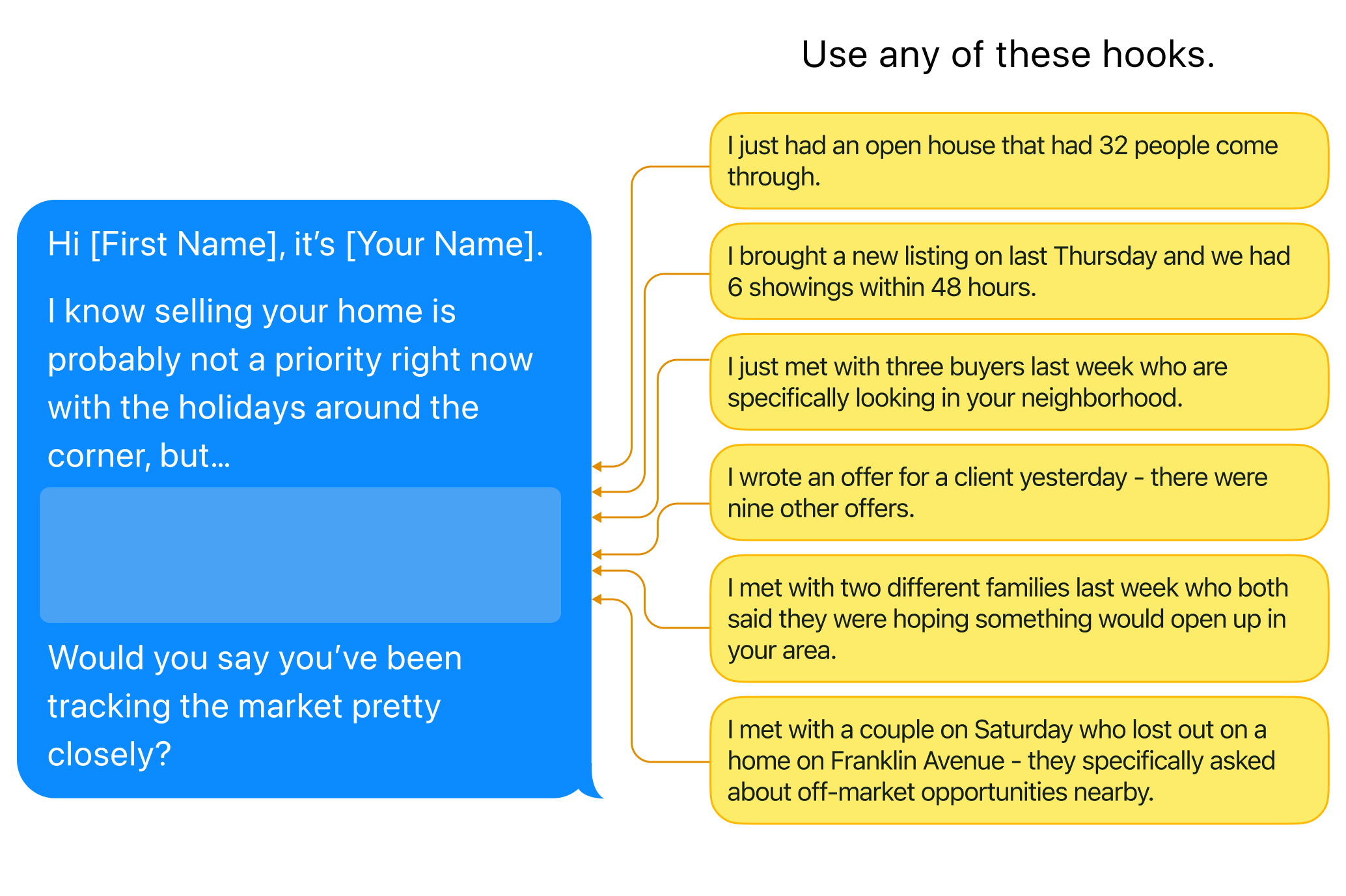

This text works because it turns a simple follow-up into a high-response moment. Everyone who opened yesterday’s email is your prospecting list for this script.
The apology is the hook. It feels human, unscripted, and disarming.
Most agents close with low-status lines like “Let me know” or “Just following up.” Those phrases put you in a waiting position. High-status phrasing, the kind Mark Satterfield teaches, flips that dynamic. It shows confidence, direction, and leadership, exactly what clients want from an agent.

People love an apology
here's the thing is I will say this is the I'm sorry script is a killer killer
way to re-engage people who have let's say you miss an opportunity. So Sam
let's say you were part of my open house as an example.
script as a way to sort of bridge that gap for any old open house leads, but I'm not doing that mass marketing. I'm definitely doing that as a onetoone text.

Anyone who opened yesterday’s email is your prospecting list for this text. They’ve already shown interest - that’s all the qualification you need. This message is designed to follow up that signal in a way that feels personal, intentional, and low-pressure.
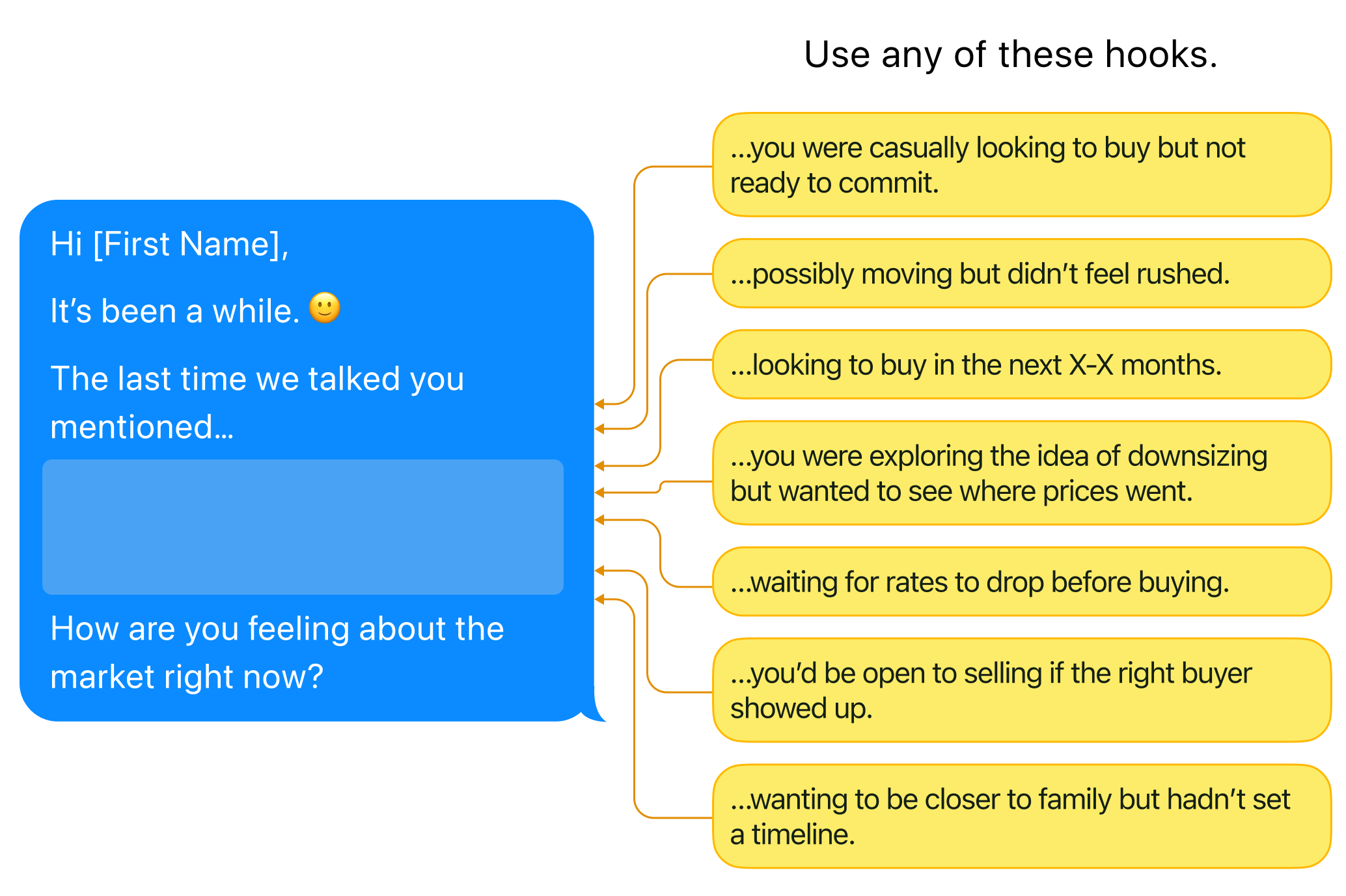
The key phrase here is: “The last time we talked you mentioned…”
Vanessa Van Edwards, a famous psychologist, teaches that this line immediately increases likability because it shows you listened and remembered. In real estate, being likable and competent builds trust quickly.
The hooks provided are simply examples, use the one that matches your actual past conversation with this person. The goal is to reference something specific, then end with an open, non-pushy question.

This text is simple, sincere, and perfectly timed. Right now is the ideal moment to reach out to your 2025 clients with a quick message of genuine appreciation. These are the relationships that matter, and a small, thoughtful touch goes a long way.
The script is intentionally warm and straightforward. Use it as written, or personalize it with a detail from their move.
Pro-tip: Send this as a text or a 1:1 off-the-cuff video. It doesn’t need to be polished, authentic always beats produced.

This text is designed for everyone who opened your last email but didn’t respond.
It feels personal, conversational, and creates an easy opening for a reply without pressure.
Use it to re-engage homeowners who are sitting on the fence. It combines empathy about uncertainty with a soft offer of insight about what is actually selling right now.

This text works because it’s built on two simple but powerful psychological triggers: social proof and likability.
The opening line - “It seems like every week lately I hear from someone…” - taps into social proof, the idea that people look to others’ behavior to guide their own decisions. It lowers resistance by showing that change is normal right now, not risky.
Then comes likability, one of the most studied principles in persuasion. As Vanessa Van Edwards teaches, people are far more likely to respond to someone who makes them feel seen and valued. “Made me think of you” does exactly that - it’s warm, personal, and human.
The question at the end is strategic too. You’re not asking something abstract, you’re asking what they already know. That’s how you start more conversations that actually go somewhere.

Two years ago, rates were 7.91%. Now, they’re flirting with the fives.
Five isn’t just another number, it’s the magic number.
When rates are in the sixes, only 6% of prospective sellers think about selling. In the 5’s, that number jumps to 35%.
So what can you do with this information?
Use it to book your next appointment. Send this text to 50 prospects today.

This time of year is perfect for a soft, strategic touchpoint.
As the year winds down, homeowners start thinking about what’s next - new goals, new plans, maybe even a move in 2025. That’s your cue to step in with something valuable: a personalized home value report.
Sure, you could blast it out to your whole list. But a smarter move is to focus on the people who opened yesterday’s email. That subject line did the qualifying for you. If they opened, they’re curious, and this text is your natural next step.

Rates just gave you the perfect reason to text.
With the daily average dipping to around 6.17% (the lowest we’ve seen in nearly three years) buyers are waking up again.
This text builds on that moment - with a home value angle. Send it to everyone who opened yesterday’s email.