

My Favorites

One market headline can hide ten very different realities.
This video campaign exists to correct that blind spot. Too many buyers and sellers still talk about “the market” as if every neighborhood moves the same way. It doesn’t. And right now, that misunderstanding is costing people time, leverage, and real money.
This YouTube template was directly inspired by Living in Las Vegas with Vicky and Kyle because it works - it’s specific, visual, and grounded in real data. Instead of vague forecasts, you’re breaking your city into hot and cold pockets using months of inventory, days on market, and buyer behavior. That’s the kind of clarity people are actively searching for on YouTube.
For you, this positions authority fast. You’re not reacting to headlines, you’re interpreting them locally. And as the video unfolds, the strategy naturally shifts from insight to guidance, setting up clean conversations with buyers and sellers who want to move with the market, not against it.

Attention is the real currency on Instagram, and this campaign spends it wisely.
You’re not teaching a market class here. You’re using a single, relevant data point to create momentum and invite participation at the exact moment people are resetting their goals.
This Instagram Story template is about surfacing early intent, starting conversations, and tagging people mentally as “thinking about a move.”
From here, the strategy is simple: watch who engages and respond with a 1:1 DM.
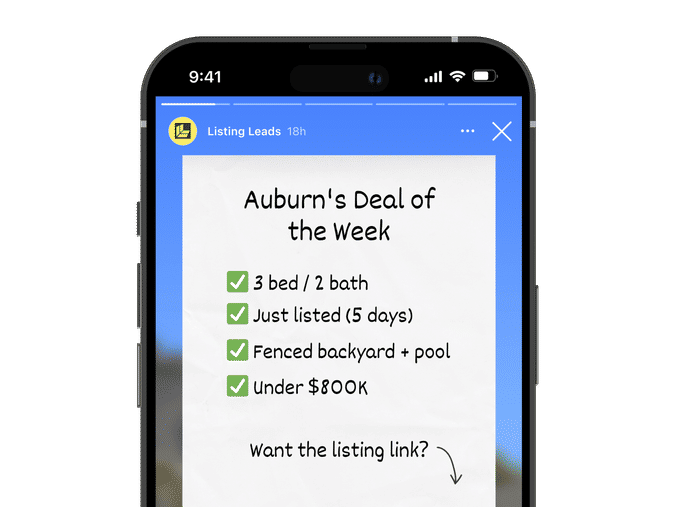
If it doesn’t already, the “Deal of the Week” should live in your weekly SOPs. Every week, find the hottest new listing in your market - and turn it into a reason for people to stop, share, and engage.
We know: you can’t always get the listing agent’s permission to share the photos of your Deal of the Week. That’s why we created this template.
Follow the instructions below on how to edit the template in Canva and post to Instagram.
Not sure which listing to feature?
- Filter for new listings (within the last 7 days)
- Focus on your target price point
- Stay in your ideal neighborhood or farm area
That should give you a pool of 50–70 listings.
From there, zero in on the one with the highest saves or views—that’s your deal of the week.

The holidays naturally slow things down, and that’s a good thing. It creates space to handle the small marketing details that rarely get attention during the year - without pressure, urgency, or overwhelm.
This campaign is designed as a simple checklist. A way to review your brand, clean up what’s outdated, and make sure everything still reflects who you are and how you work today. Bios get refreshed. Links get fixed. Profiles get aligned.
The 2026 Marketing Refresh helps you close out the year feeling organized and confident, not rushed. When the new year starts, your foundation is already in place - and your future marketing has a clearer path forward.
Enjoy the holidays! We’re excited to help you hit the ground running when we’re back on January 5th.
We've got big plans for the New Year.
Let’s make 2026 amazing together!

This call script is designed to anchor the conversation to the letter and shift the seller from emotion into reflection. You’re inviting them to articulate where things broke down. By reinforcing the three leverage points, you reframe the failure as a strategy issue, not a personal one.

This call script is designed to establish credibility without bragging. You reference results to create confidence, then immediately shift the spotlight off the numbers and onto strategy. By naming specific tactics, you differentiate yourself from generic agents while keeping the focus on buyer behavior. The “last outreach” line adds respect and scarcity without pressure. The purpose of this call is to clearly position you as the professional with a plan, and then let the seller decide if they want access to it.

This call script is designed to use story as proof. Instead of leading with claims, you let a real example do the work and invite the seller to see themselves in it. That question - did this sound familiar? - creates self-recognition, which is far more powerful than persuasion. By offering specific ideas regardless of the outcome, you position yourself as generous and confident in your process.

This call script is designed to steady the seller when everything else is loud. You acknowledge the headlines first, which lowers anxiety and shows awareness, then calmly separate media fear from market reality. By reframing the failed listing as a marketing and exposure issue - not a demand problem - you restore confidence without arguing optimism. The close respects their timing, which keeps you positioned as a guide, not a persuader. The goal here is simple: reduce uncertainty, build trust, and stay top of mind until they’re ready to move forward.

This call script is designed to reframe pricing without triggering defensiveness. You normalize their original pricing decision, then introduce timing and buyer behavior to explain why small misalignments early on have outsized consequences. The insight about first-week interest shifts the conversation from opinion to logic, which builds trust fast. From there, you move to possibility - showing that a smart relaunch can still win - before offering help in a low-pressure way. The goal isn’t to debate price; it’s to reset the frame and open the door to a better strategy.

This call script is designed to anchor the conversation to the letter and shift the seller from emotion into reflection. You’re inviting them to articulate where things broke down. By reinforcing the three leverage points, you reframe the failure as a strategy issue, not a personal one.

This call script is designed to lower resistance first. Lead with empathy and validate their experience. Data shows sellers are far more open once they feel understood - and far less likely to shut down when you ask permission instead of pushing advice.
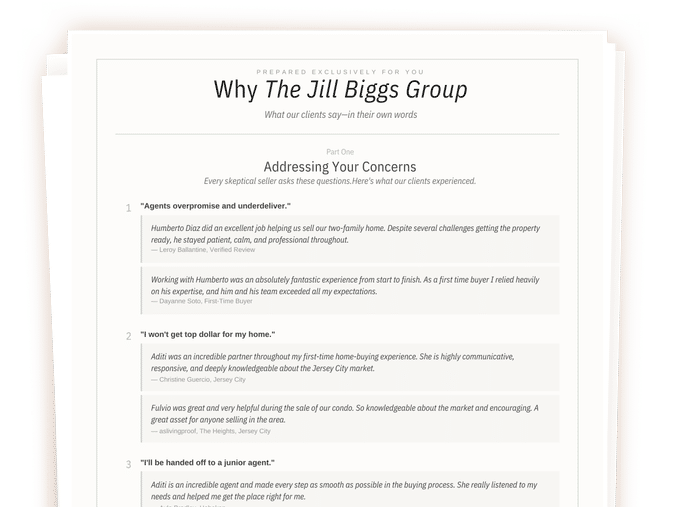
This piece is one of the most powerful parts of the Cannonball because it does something most agents avoid: it brings every objection into the open.
You’re naming the exact thoughts already running through the seller’s head - fear of empty promises, stress, poor communication, being passed off, leaving money on the table. When they read these, they feel understood before you ever speak.
The second hurdle you’ll need to clear with expired sellers:
Are they good at their job?
Let your clients do the talking. Each testimonial is a direct counterpunch to doubt.
The second section zooms out and reinforces that you’re great at your job.
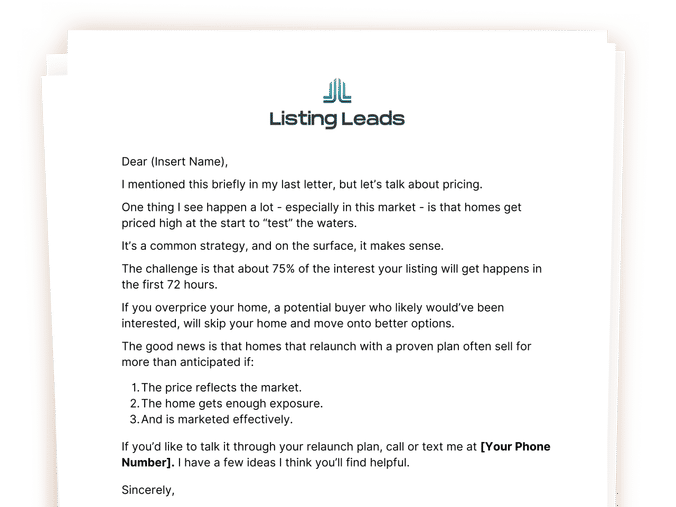
This letter tackles one of the most sensitive topics in real estate, but it does so without accusation or pressure. You’re not telling the seller they were wrong. You’re showing them how the market actually behaves when a listing launches, and why those first few days matter more than most people realize.
The key move here is education, not correction. By introducing the idea that the majority of buyer interest happens early, you help the seller see pricing as a timing and exposure issue, not a judgment on their home’s worth. That shift lowers resistance fast.
You also balance the message with hope. You make it clear that a relaunch - done correctly - can increase results, not just fix mistakes.
This letter positions you as the steady professional who understands the mechanics behind the outcome and knows how to reset momentum the right way.
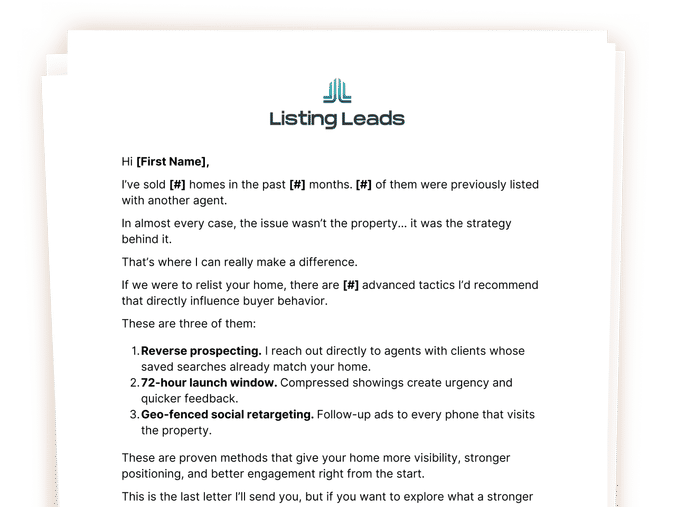
This final letter is where you fully step into authority. You’re not easing in anymore - you’re stating facts. Your track record. Your volume. And the clear pattern you’ve seen when homes don’t sell. The problem isn’t the house. It’s the plan behind it.
This message works because it introduces advanced tactics without overwhelming the seller. You’re giving them just enough to realize there’s a different level of marketing they likely haven’t been exposed to—while signaling that you know far more than what fits in a letter.
Each tactic is behavioral, not flashy. It explains why buyers act differently when the launch is engineered correctly.
This is your mic-drop moment - positioning you as the professional who finishes the conversation strong and leaves the next move entirely in their hands.

Skepticism fades when strategy becomes visible.
This letter exists to replace hope with proof. After messages of clarity and reframing, now you show - not tell - what happens when the right plan is applied. But this only works if the example is real, recent, and specific.
This must be a personalized case study from your own business. A property the seller can picture. A timeline they recognize. Details that make the outcome undeniable. Days on market. Number of offers. What changed at relaunch. Vague success stories won’t land here, specifics create belief.
Notice you’re not promising the same result. You’re demonstrating what’s possible when presentation, promotion, and pricing finally align. That keeps the message credible and consultative.
This letter is where confidence starts to replace hesitation.
You’re no longer just explaining the problem - you’re showing you’ve already solved it, recently, and right where they live.
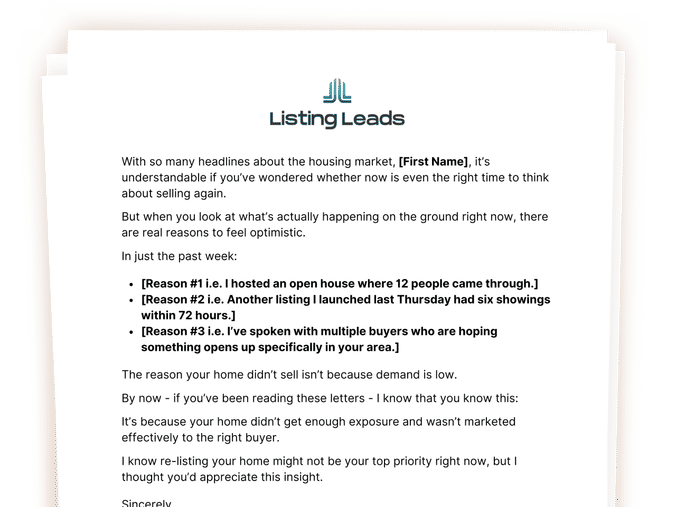
This letter is designed to pull the seller out of the national noise and re-anchor them in what’s actually happening right now in their market.
The credibility here comes from specificity. Open houses you hosted. Showings you tracked. Buyers you’ve spoken with. This must be customized with real, hyper-local observations that only someone actively working in the market could know. That “boots on the ground” perspective is what separates you from every generic market update they’ve already ignored.
You’re also reinforcing a key theme from earlier letters: demand isn’t the problem - exposure and execution are. By now, that idea should feel familiar, even obvious, to the seller.
This message restores momentum without urgency.
It keeps you top of mind while gently reminding them that when they’re ready, there’s a smarter way forward.