

My Favorites
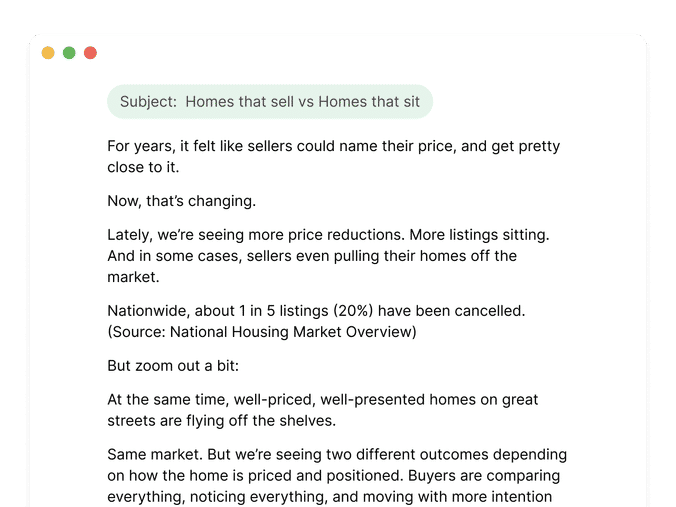
When sellers price for the market they remember - not the one they’re in - homes sit, prices drop, or listings disappear.
This email helps you name that disconnect and start the kind of conversation that leads to smarter pricing, stronger positioning, and fewer surprises. We also added a soft P.S. for buyers—because in this market, some well-priced homes are absolute steals.
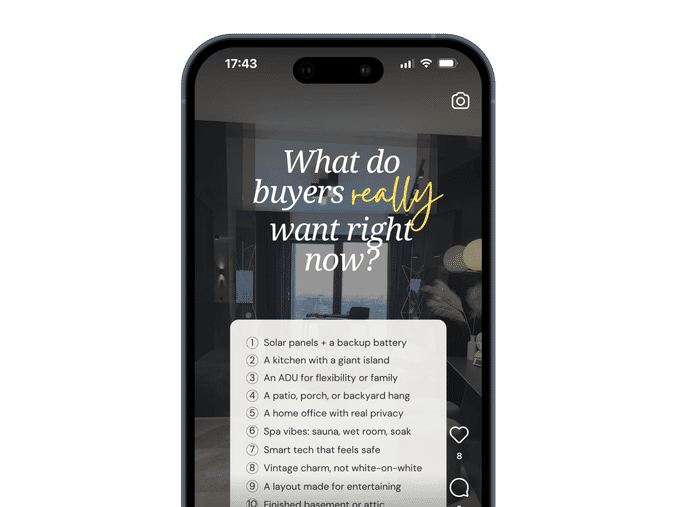
This IG reel is fast, visual, and ridiculously easy to execute, but it’s also backed by real data from Zillow, NAHB, and HomeLight on what today’s buyers are actually looking for.
Post as-is or update any of the ten points to reflect what you’re seeing in your market.
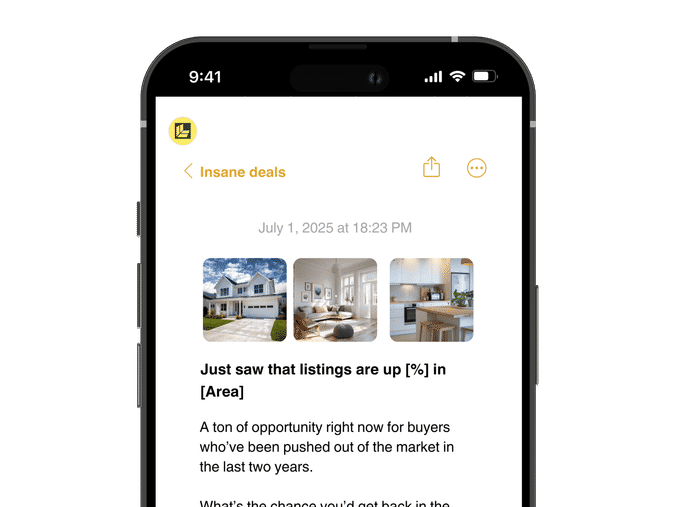
Inspired by a killer reel from Rick J Lee, and built around the same psychology behind our “What’s the chance?” text, we’re lowering the bar and opening the loop.
“Getting back in the market” feels casual. The options feel safe. But the insight you get? Game-changing.
This one’s short, strategic, and built for engagement.

Most scripts put people on defense. This one opens the door.
In a market full of hesitation, your message has to do more than inform - it has to disarm.
That’s why we built this text around three words I picked up from a Lewis Howes video: What’s the chance? It’s playful, non-threatening, and it bypasses the part of the brain wired to shut down salesy conversations.
Instead of pressure, it invites possibility. And for buyers who’ve felt sidelined the last two years, that’s exactly the kind of nudge that gets them to re-engage.

When sellers price for the market they remember - not the one they’re in - homes sit, prices drop, or listings disappear.
That’s the story behind two new reports from Realtor.com and Clever, and the reason we built this campaign.
The data is clear: 72% of future sellers think they’ll get over asking. Only 42% of recent sellers actually did. Nearly half had to cut their price. And delistings? Up 47% year-over-year.
This email helps you name that disconnect and start the kind of conversation that leads to smarter pricing, stronger positioning, and fewer surprises. We also added a soft P.S. for buyers because in this market, some well-priced homes are absolute steals.

The Deal of the Week strategy needs to be added to your weekly marketing SOPs. It's simple, repeatable, and highly effective.
Brad McCallum sent this email and got 20 replies.
The best part?
It wasn't their listing.
But here's the thing...
This email is just the beginning.
Repurpose your Deal of the Week into an IG poll and an SOI text.
This is how you can take a winning marketing campaign and maximize the impact.
Not sure which listing to feature?
Start here:
- Filter for new listings (within the last 7 days)
- Focus on your target price point
- Stay in your ideal neighborhood or farm area
That should give you a pool of 50–70 listings.
From there, zero in on the one with the highest saves or views—that’s the listing with heat behind it.
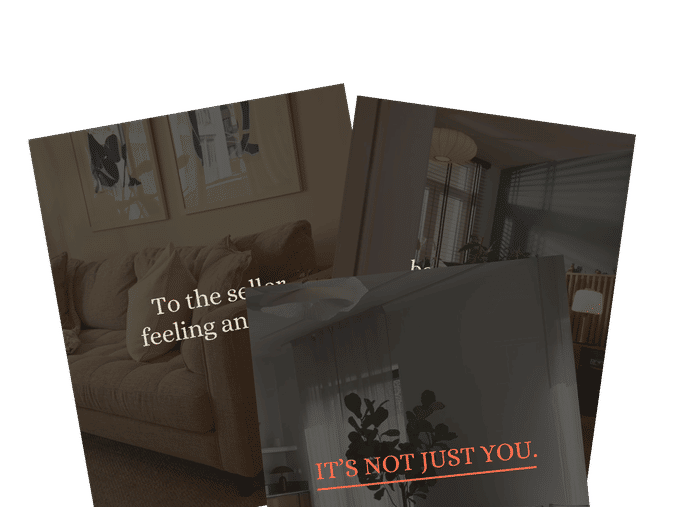
This Reel is for the sellers who are feeling anxious, and for the agents who want to speak to that emotion with honesty.
The campaign was inspired by a fantastic post from Shannon Gillette, who nailed what so many homeowners are feeling right now: “We’re doing everything right… so why hasn’t it sold?”
We took that message and reshaped it into a simple, text-based Reel you can post as-is with a reassuring message that normalizes slower sales and reminds sellers: it’s not just you, this is the market.
Update the “average days on market” to match your area, choose a reflective or trending audio, and post it.
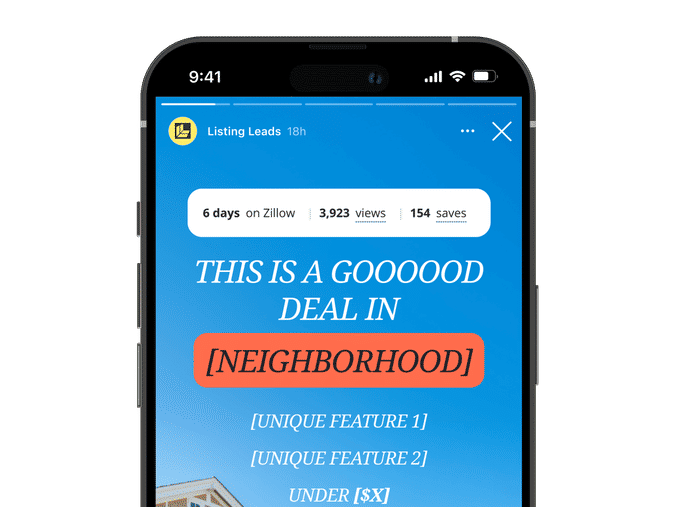
If your Story views are strong but engagement is flat—this is the format to fix it.
We’ve been testing all kinds of ways to bring the “Deal of the Week” to Stories—and this one's a keeper.
It’s visual. It’s clever. And it mimics a play we’re seeing everywhere from top influencers: tease the value, show a receipt (like listing views), then drop the link behind an emoji.
Why does it work? Because it builds curiosity before it asks for action.
You’re not shouting “BUY!”—you’re drawing attention to demand. That alone makes this feel less like an ad, more like a can’t-miss opportunity.
The best part? You only need one slide. A Zillow screenshot. A few strategic details. A clear price anchor.
And everyone who clicks? That’s your follow-up list.
Not sure which listing to feature?
Start here:
- Filter for new listings (within the last 7 days)
- Focus on your target price point
- Stay in your ideal neighborhood or farm area
That should give you a pool of 50–70 listings.
From there, zero in on the one with the highest saves or views—that’s the listing with heat behind it.
Use this format to test urgency, stay visible with buyers, and stay top of mind.

This Story poll is a simple way to turn views into conversations.
By offering specific options (price, feature, location), you give buyers an easy, non-intrusive way to raise their hand.
It works because it feels like help, not a sales pitch.
Customize the options based on what buyers in your market are actually searching for, then post.
When responses come in, check your DMs and follow up with confidence.
See below for recommended follow-up scripts to keep the convo going.

This referral text is simple but strategic.
It’s based on research from Vanessa Van Edwards, a behavioral expert who studies how warmth, trust, and status drive responses.
Here’s what makes it work:
1. It opens with a high-warmth cue—“You’re so well-connected”—which triggers trust and makes the person feel seen.
2. It keeps the ask mutual, not transactional. You’re not selling—you’re inviting them into something valuable.
3. It uses power + warmth language to describe the listing. Instead of underselling it (“might be a good fit…”), you’re quietly signaling urgency and quality.
Send it now if you’ve got a great listing to a contact who knows everyone.
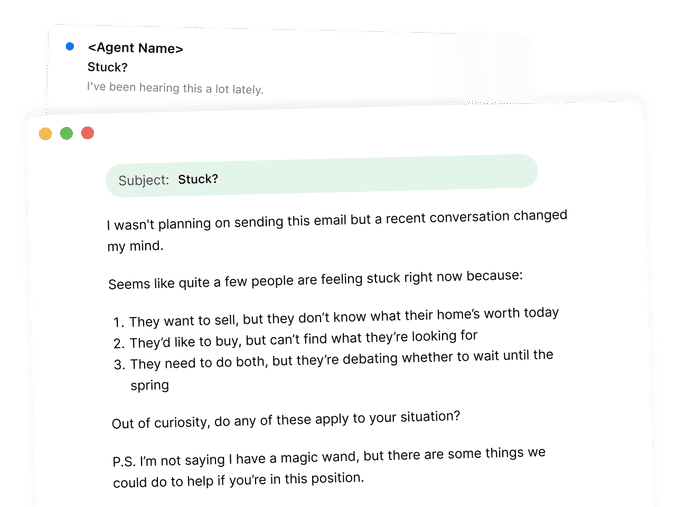
We call this a “fast ball” email because it’s quick, clean, and built to get replies.
It leads with empathy. It sounds personal, even off-the-cuff. And it mirrors the exact conversations many agents are already having right now, where people want to move but feel frozen by uncertainty.
The format is simple on purpose: A short, genuine note that puts a few common scenarios on the table and invites the reader to raise their hand. That’s it.
Let’s get it out there.

A good Coming Soon campaign doesn’t just build anticipation—it builds connection.
This letter taps into something we see all the time in tight-knit neighborhoods: someone hears a home is hitting the market, and immediately thinks, “I wonder if [friend/family member] would want to live here…”
We designed this campaign to make that moment more powerful.
It gives neighbors first-look access plus insider prep details they won’t find online—creating a sense of trust, transparency, and exclusivity. It makes them feel like they’re in the loop, not just on the list. And if they know someone looking? You’re now the obvious person to call.
This isn’t just a teaser. It’s a hand-delivered reason to talk about your listing before it goes live. Use it to spark conversations and referrals.

Most Just Listed letters are forgettable. This one isn’t.
Because it doesn’t just announce a listing,it answers the one question every homeowner actually cares about: “Why should I care?”
This campaign leads with value: It highlights the specific, strategic improvements you made to prep the home, giving neighbors real ideas they can apply to their own property, whether they’re selling now or two years from now.
It does three things at once:
✔ Shows the caliber of work you do behind the scenes
✔ Educates homeowners on what buyers in their neighborhood really care about
✔ Keeps you top-of-mind as the expert who understands how to market a home, not just list one
It’s not just a listing announcement. It’s a positioning play.

Right now, the typical homeowner wants $39K more than buyers are willing to pay. And too many agents are losing the conversation before it even starts, because they’re not showing the cost of a bad plan in real terms.
That’s what this campaign is built to do.
It takes sellers out of “let’s test the market” mode and shows them, clearly and calmly, how that mindset leads to a $23,000 mistake they never saw coming. Use this letter to reframe what smart pricing actually means in today’s market.
We based the $23K on a $500,000 home, factoring in two to three months of mortgage, taxes, insurance, and utilities. You can adjust the number to better reflect average home prices in your market.

This campaign has generated millions of dollars in listing appointments. It's the incredibly popular Name Your Price campaign.
Here's a pro-tip: This tactic was originally designed to be an email campaign but really smart agents are leveraging it as a direct mail piece as well.
When an idea works, extend it to other channels.
Always double down on your winners.

You’re not just selling homes. You’re selling certainty—in a market full of doubt.
The mistake? Thinking your experience speaks for itself. It doesn’t. Not anymore.
We saw this video by Dewayne Carpenter—just 90 seconds, no fluff, no hype—and it stopped us cold. It framed experience not as ego, but as an edge. And it did what most agent videos don’t: it made us feel the value of working with someone who’s done the reps.
So we reverse-engineered it.
We broke down the structure, reworked the beats, and wrote you a script that’s ready to record—without sounding like a script. Something you could put on your homepage, pin to your YouTube channel, or use as a trust-building asset when someone’s deciding whether to hit “schedule a call.”
This isn’t about flexing your résumé. It’s about translating experience into language the consumer actually understands—and values.
Use this to show—not tell—why working with you isn’t a gamble. It’s a shortcut.