

My Favorites

“Now is a great time to buy” isn’t landing anymore - and sharp buyers are telling us why.
They’re paying attention. They see the affordability headlines, the shaky confidence, the mixed economic signals. When agents default to optimism without context, buyers tune out. That’s exactly why we built this campaign.
This is a contrarian reset. Not to be negative, but to be credible.
Instead of asking buyers to believe a slogan, this message helps them think. It acknowledges what’s hard right now, then reframes the real question they should be asking: What’s my timeline? Not Can I time the market?
The data makes one thing clear: short-term, speculative thinking gets punished. Long-term ownership still wins. This email helps your clients zoom out, apply the data to their own goals, and breathe again.
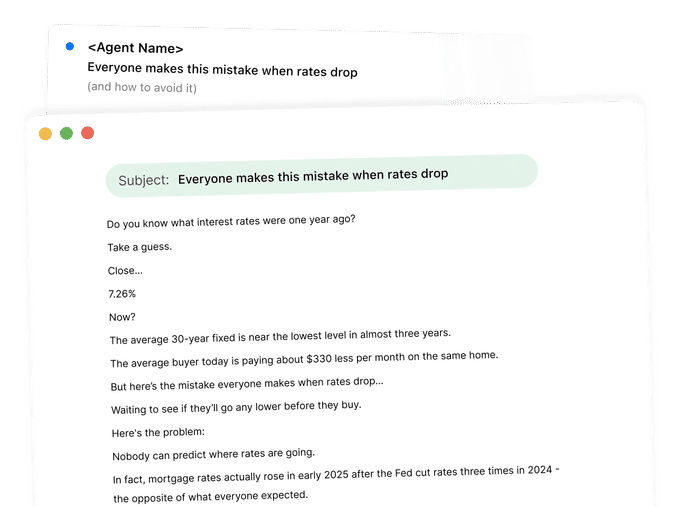
Rates dropping doesn’t automatically create opportunity. How you talk about it does.
Before we wrote this campaign, we went digging. We pulled fresh data David Childers from Keeping Current Matters shared with Jimmy on an Instagram Live, cross-checked it, and then watched the conversation unfold across Twitter all week. Same question everywhere: Will rates go lower? Should buyers wait?
Here’s what stood out. One year ago, buyers were facing rates over 7%. Today, they’re near a three-year low, which translates to roughly $330 less per month on the same home. That’s real money. But history also shows something most consumers miss: rates don’t move the way headlines predict. Even after multiple Fed cuts in 2024, rates rose in early 2025.
This email positions you as a calm, informed voice. It opens the door for smarter conversations instead of rate speculation, and sets you up as the guide buyers trust when timing feels uncertain.
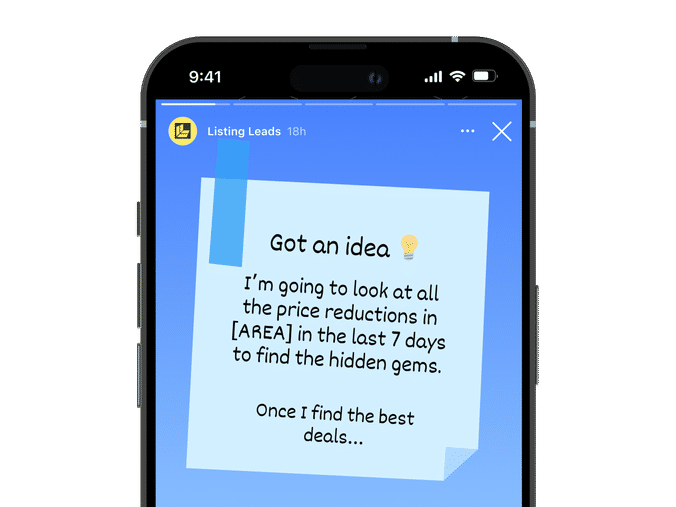
This is meant to feel casual, and that’s why it works.
We saw this hook from a newer creator on Instagram and liked how off-the-cuff it felt. We adapted that same structure to price reductions because it gives buyers something concrete without sounding like a listing blast.
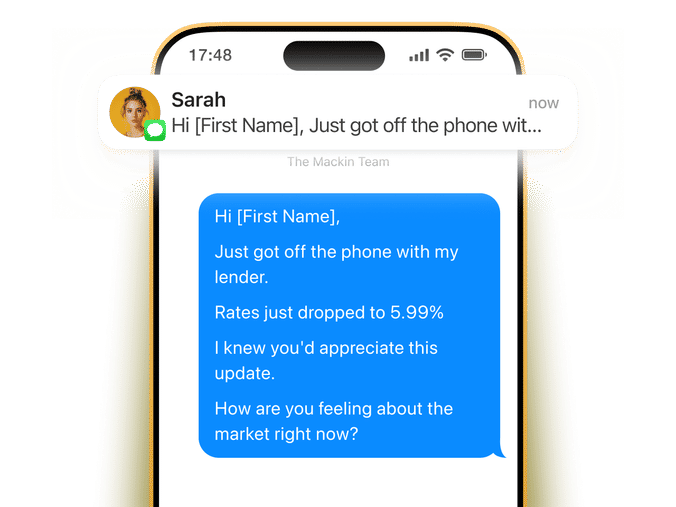
You saw the news.
Rates dropped to 5.99%.
It may be a small dip, but a big psychological hurdle.
35% of potential sellers would consider selling in a 5% interest rate environment.
That’s 7× higher than when rates are above 6%.
You know all that locked-in inventory from 2023-2024. It’s about to get unlocked.
So here’s the script you need to 50 people right now.
.png?tr=w-676)
This text is a simple follow-up to yesterday’s email - send it to people who already opened it. Why? These contacts have already shown interest, so this isn’t a cold check-in.
You’re doing three things here, very intentionally: keeping them informed, pointing to a real upcoming event (the Fed meeting on Jan 28), and asking permission to stay in touch if rates move.

This campaign is designed to help you sound informed, early, and calm while others are still recycling last year’s talking points. You’re pointing out a change in starting conditions - and backing it with fresh data from Mike Simonsen and Redfin.
The goal here is simple: position yourself as the agent who’s paying attention now, and not waiting for permission to be useful.
Follow up tomorrow with everyone who opens this email using this text.

When buyers are deciding where to live, they’re not looking for a neighborhood tour—they’re trying to make a comparison. A choice. That’s why “Neighborhood A vs Neighborhood B” consistently outperforms almost every other local video format. It mirrors how people actually think.
This template was directly inspired by a Living in NYC video that pulled in 12,000 views - more than 12× her average - because it did one thing well: it helped viewers decide.
Pick two neighborhoods buyers already compare, follow the structure, and let the contrast do the heavy lifting.
/Should%20I%20contact%20you%20if_%20(CA).png?tr=w-676)
This text is a simple follow-up to yesterday’s email - send it to people who already opened it. Why? These contacts have already shown interest, so this isn’t a cold check-in.
You’re doing three things here, very intentionally: keeping them informed, pointing to a real upcoming event (the Fed meeting on Jan 28), and asking permission to stay in touch if rates move.

Want us to automate the Deal of the Week for you every week? Try out AI Mode.
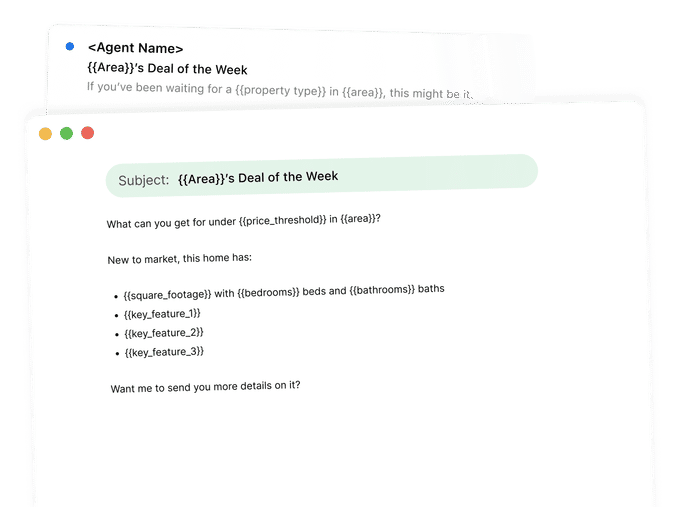
The Deal of the Week strategy needs to be added to your weekly marketing SOPs. It's simple, repeatable, and highly effective.
Use the template we provided below to send out your Deal of the Week, use this free tool to write the email and send it yourself, or get AI Mode to automate the entire process for you.
Not sure which listing to feature?
- Filter for new listings (within the last 7 days)
- Focus on your target price point
- Stay in your ideal neighborhood or farm area
That should give you a pool of 50–70 listings.
From there, zero in on the one with the highest saves or views—that’s your deal of the week.
/3%20signs%20that%202026%20will%20be%20different%20for%20buyers%20(CA)@1x.png?tr=w-676)
This campaign is designed to help you sound informed, early, and calm while others are still recycling last year’s talking points. You’re pointing out a change in starting conditions - and backing it with fresh data. This data is pulled specifically from Royal LePage’s recent market report.
The goal here is simple: position yourself as the agent who’s paying attention now, and not waiting for permission to be useful.
Follow up tomorrow with everyone who opens this email using this text.
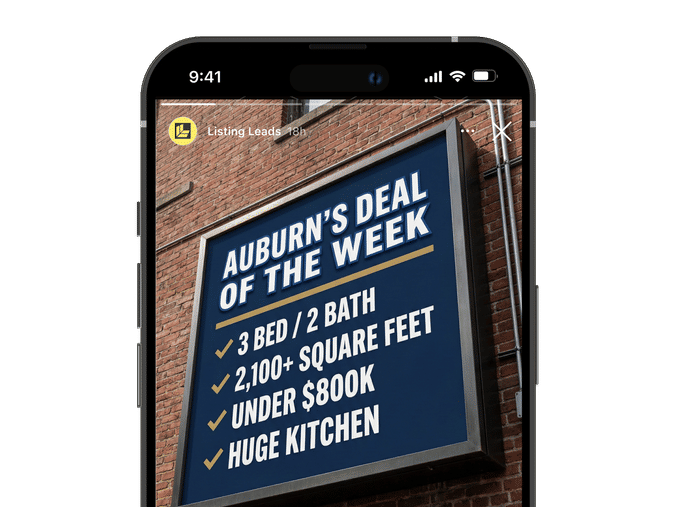
If it doesn’t already, the “Deal of the Week” should live in your weekly SOPs. Every week, find the hottest new listing in your market - and turn it into a reason for people to stop, share, and engage.
We know: you can’t always get the listing agent’s permission to share the photos of your Deal of the Week. That’s why we created this template.
Follow the instructions below on how to edit the template in Canva and post to Instagram.
Not sure which listing to feature?
- Filter for new listings (within the last 7 days)
- Focus on your target price point
- Stay in your ideal neighborhood or farm area
That should give you a pool of 50–70 listings.
From there, zero in on the one with the highest saves or views—that’s your deal of the week.
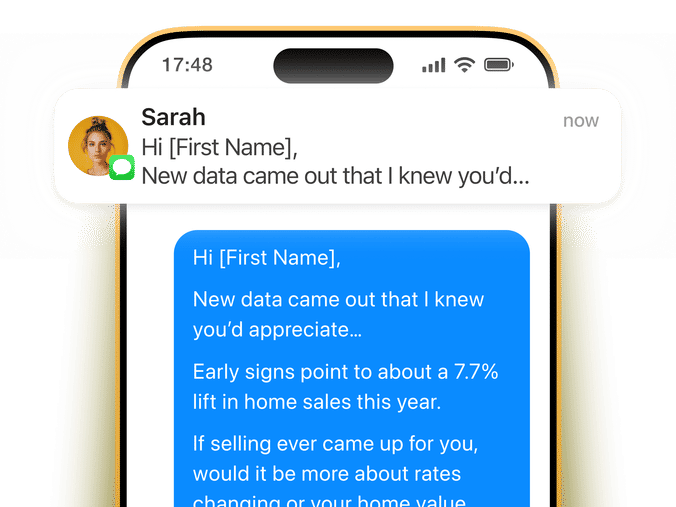
This text campaign is built for follow-up, not broadcast. You’re sending it only to people who opened yesterday’s email.
The power here isn’t the stat alone - even though a projected 7.7% lift in home sales is meaningful (Source: CREA). It’s how you use it. Instead of telling people what to think, you invite them to reflect on why they’d move. Rates or value. Timing or motivation. That simple question lowers resistance and opens a real conversation.
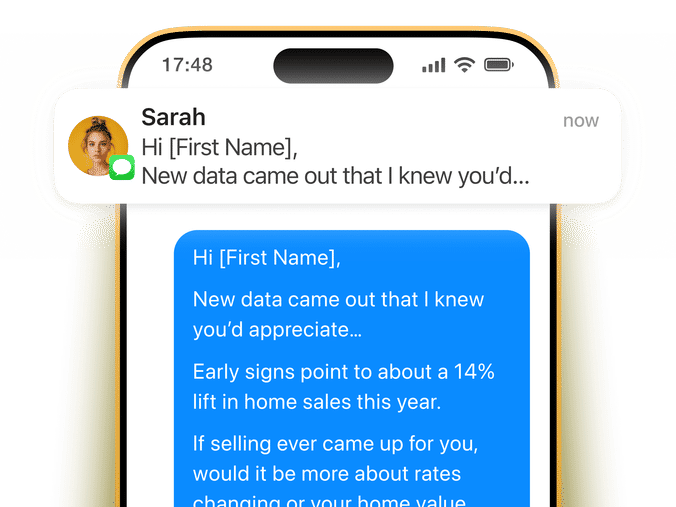
This text campaign is built for follow-up, not broadcast. You’re sending it only to people who opened yesterday’s email.
The power here isn’t the stat alone - even though a projected 14% lift in home sales is meaningful (Source: NAR). It’s how you use it. Instead of telling people what to think, you invite them to reflect on why they’d move. Rates or value. Timing or motivation. That simple question lowers resistance and opens a real conversation.

This campaign is designed to separate you from the agents who are still leading with generic promises. You’re speaking to homeowners who haven’t listed yet… and are trying to decide who they trust to get it done right the first time.
It introduces real market friction (listings failing to sell) without alarmism, then reframes the problem around three controllable levers: presentation, promotion, and price.
This is a value-forward, database-wide touch meant to spark clarity and confidence.

Attention is the real currency on Instagram, and this campaign spends it wisely.
You’re not teaching a market class here. You’re using a single, relevant data point to create momentum and invite participation at the exact moment people are resetting their goals.
This Instagram Story template is about surfacing early intent, starting conversations, and tagging people mentally as “thinking about a move.”
From here, the strategy is simple: watch who engages and respond with a 1:1 DM.