

My Favorites
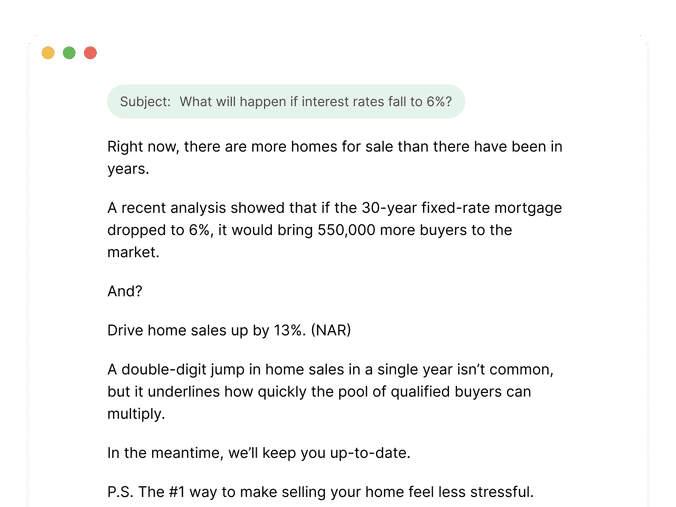
Rates don’t have to fall far to shake things up.
If the 30-year fixed dropped to 6%, NAR’s chief economist says it would make homeownership possible for 5.5 million more households. About 10% of those people would likely buy within the next year. That’s 550,000 buyers suddenly in the game.
And that kind of shift would push home sales up by 13%.
Here’s why this campaign matters for you: it’s built to qualify through copy. If someone clicks into an email like this, they’re curious about rates, about timing, about opportunity. In other words, they’re already paying close attention. The P.S. gives sellers a gentle way to raise their hand too.
Everyone who opens this email? Follow-up with this text tomorrow.

Rates that start with a “3” carry more weight than most people realize.
That’s the story we’re telling with this campaign. CREA’s chief economist is already pointing to a shift: sales are climbing, five months in a row, and buyers see sub-4% as a return to “normal.”
Here’s why this campaign matters for you: it’s built to qualify through copy. If someone clicks into an email asking what happens when mortgages fall into the 3s, they’re telling you they’re tuned in. They’re curious about timing, opportunity, and the market’s next move. The P.S. then gives sellers a gentle way to raise their hand, keeping the door open for listing conversations too.
Everyone who opens this email? Send them this follow-up text tomorrow.
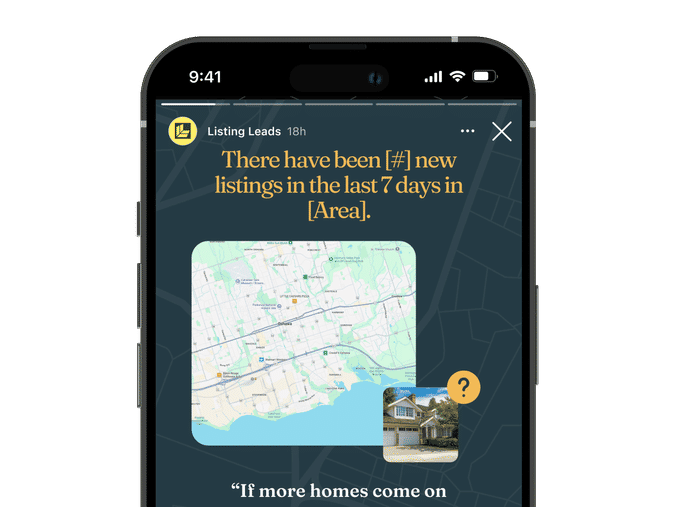
This one’s a quick poll with a clear purpose.
You’re pairing a timely market stat with a forward-looking “If this, then I will…” prompt so it feels relevant and personal. That combo works (we’ve tested it).
Use it to surface hand raisers without asking anyone to commit. Just curiosity, timing, and intent.
Easy for them to answer. Valuable for you to track.

This one’s a quick poll with a clear purpose.
You’re pairing a timely market stat with a forward-looking “If this, then I will…” prompt so it feels relevant and personal. That combo works (we’ve tested it).
Use it to surface hand raisers without asking anyone to commit. Just curiosity, timing, and intent.
The stat leads: “There are now 518,801 more home sellers than homebuyers in the U.S.”
Then the question: “If more homes come on the market, I will…”
→ Consider buying in 2025
→ Look for investment property
→ Wait until 2026
Easy for them to answer. Valuable for you to track.

If it doesn’t already, the “Deal of the Week” should live in your weekly SOPs. Every week, find the hottest new listing in your market - and turn it into a reason for people to stop, share, and engage.
We know: you can’t always get the listing agent’s permission to share the photos of your Deal of the Week. That’s why we created this template.
Follow the instructions below on how to edit the template in Canva and post to Instagram.
Not sure which listing to feature?
- Filter for new listings (within the last 7 days)
- Focus on your target price point
- Stay in your ideal neighborhood or farm area
That should give you a pool of 50–70 listings.
From there, zero in on the one with the highest saves or views—that’s your Deal of the Week.

This letter works.
The ZMA campaign has been one of our most successful direct mail pieces because it’s simple, personal, and impossible to ignore.
You’re not just dropping a flyer. You’re sending their home, printed straight from either Realtor.ca, HouseSigma, or something similar, with their online estimate circled in pen and a handwritten sticky note that asks: “Would you consider selling for more than this?”
It’s bold. And it sparks exactly the kind of conversation you want with potential sellers.
This updated version keeps the magic of the original which is, the handwritten feel, the direct question but sharpens the copy to drive more responses.
Use it to cut through the noise and get real answers from homeowners who might be more ready than they think.

This letter works.
The ZMA campaign has been one of our most successful direct mail pieces because it’s simple, personal, and impossible to ignore.
You’re not just dropping a flyer. You’re sending their home, printed straight from Zillow, with their Zestimate circled in pen and a handwritten sticky note that asks: “Would you consider selling for more than this?”
It’s bold. And it sparks exactly the kind of conversation you want with potential sellers.
This updated version keeps the magic of the original which is, the handwritten feel, the direct question but sharpens the copy to drive more responses.
Use it to cut through the noise and get real answers from homeowners who might be more ready than they think.

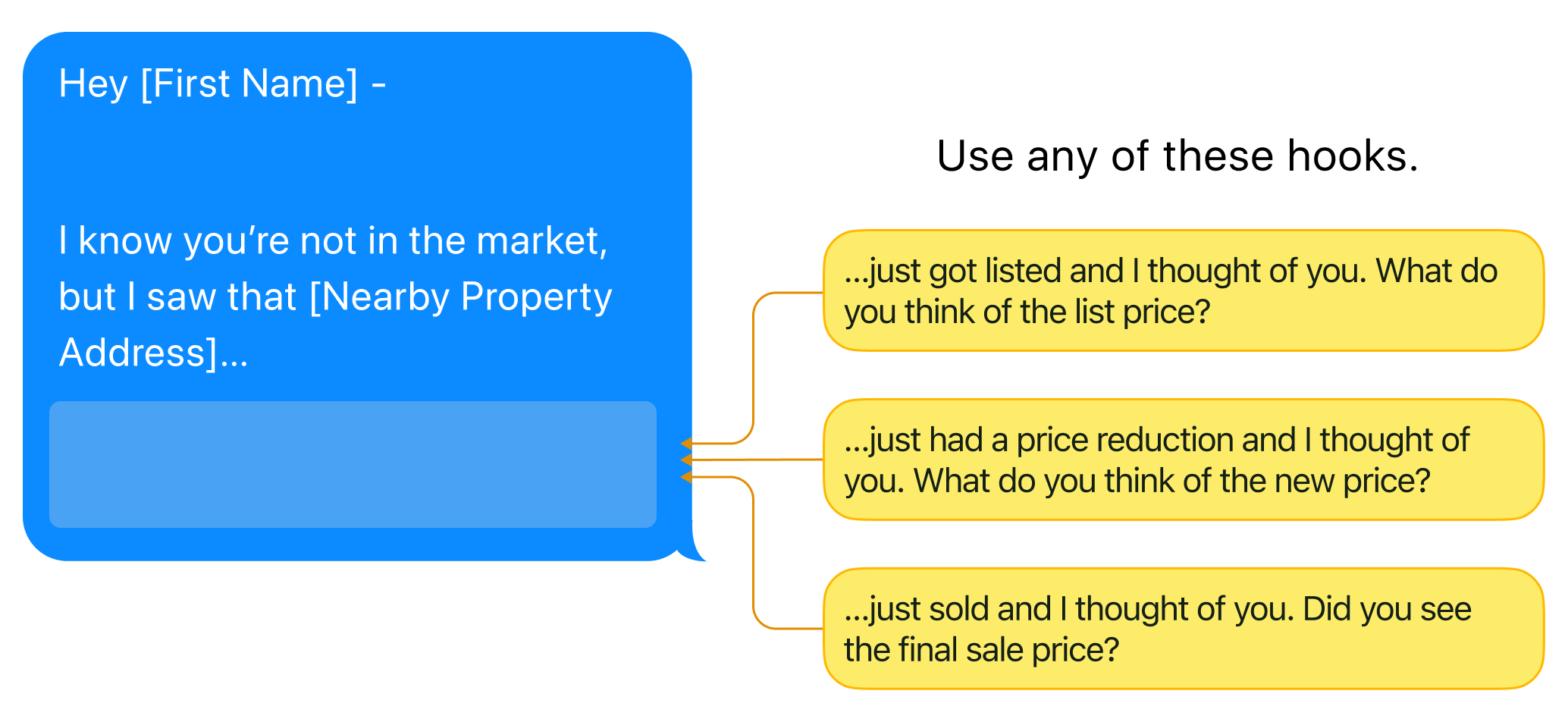
This one’s built for your SOI and past clients.
It’s a simple check-in without any agenda.
You lead with “I know you’re not in the market” which instantly lowers their guard. Then you layer in “I thought of you,” which, as Vanessa Van Edwards teaches, boosts likeability and connection.
From there, pick one of the hooks based on what’s happening near them:
• …just got listed and I thought of you. What do you think of the list price?
• …just had a price reduction and I thought of you. What do you think of the new price?
• …just sold and I thought of you. Did you see the final sale price?
It’s casual, relevant, and easy to respond to, which is exactly what keeps the conversation (and relationship) going.

It’s post–Labour Day, and like clockwork, new listings are flooding the market.
That changes the game.
This week, we’re focusing on purely education: a value-based email with no hard pitch and a soft CTA in the P.S.
The subject line does the qualifying for you. If they open it, chances are they’re already thinking of selling. That’s a lead. Add them to your call list.
Your job here is to guide. Use this as a moment to share your expert ideas. Show them how you would approach the sale if it were your home: how you'd study the comps, price it smart, build momentum before it hits the market, and tailor the marketing to the right buyer.
This is how you become the obvious choice before they even raise their hand.

There are 518,000 more home sellers than buyers right now. (Redfin)
That changes the game.
This week, we’re focusing on purely education: a value-based email with no hard pitch and a soft CTA in the P.S.
The subject line does the qualifying for you. If they open it, chances are they’re already thinking of selling. That’s a lead. Add them to your call list.
Your job here is to guide. Use this as a moment to share your expert ideas. Show them how you would approach the sale if it were your home: how you'd study the comps, price it smart, build momentum before it hits the market, and tailor the marketing to the right buyer.
This is how you become the obvious choice before they even raise their hand.

Stop guessing what spooks sellers. Ask them. This story poll is a one-tap filter. It trades long DMs for quick signal and surfaces real hand-raisers without pressure. The question is simple on purpose. Multiple choice. Easy to answer. You’ll learn what feels most risky and you’ll know who to follow up with first.
We’ve even included the follow-up script so you know exactly what to say when someone responds. Post the poll, watch the votes, and start the right conversations with the right people.

An FHFA study found the lock-in effect kept 1.3 million homeowners from selling between Q2 2022 and Q4 2023. Now with rates dropping, we could see more buyers and sellers re-enter the market.
That’s why this Instagram story series works: it builds the narrative step by step, grounding your audience in data, then connecting it to what’s happening right now. By the third slide, you’re not asking a yes-or-no question about moving - you’re meeting people where they are with a softer entry: At what rate would you consider re-entering the market?
It’s low-friction, easy to engage, and a natural segue into conversation. And with the included follow-up script below, you’re equipped to turn story interactions into meaningful one-on-one chats.

If it doesn’t already, the “Deal of the Week” should live in your weekly SOPs. Every week, find the hottest new listing in your market - and turn it into a reason for people to stop, share, and engage.
We know: you can’t always get the listing agent’s permission to share the photos of your Deal of the Week.
That’s why we created this template. Go here to build a map of where the listing is located.
Then follow the instructions below on how to edit the template in Canva and post to Instagram.
Not sure which listing to feature?
- Filter for new listings (within the last 7 days)
- Focus on your target price point
- Stay in your ideal neighborhood or farm area
That should give you a pool of 50–70 listings.
From there, zero in on the one with the highest saves or views—that’s your Deal of the Week.

Hidden towns drive outsized attention - and action.
Eric Meldrum proved it: his “7 Detroit-ish Towns Locals LOVE” pulled 55× more views than his average video. That’s not luck. It’s a format buyers can’t scroll past and locals can’t resist sharing. And with more buyers re-entering the market as rates ease, this is the moment to spotlight the places that don’t make the glossy lists.
Your role: be the guide. Lead with a bold promise, anchor it in simple lifestyle wins, and let the “locals-only” angle do the heavy lifting. We built a plug-and-play template so you can move fast, stay credible, and convert attention into calls.
Use this to film your own “underrated towns” video - swap in your markets, hit record, and go.

Don’t text your whole list. Text the people who already raised a hand.
Everyone who opened yesterday’s email told you they’re paying attention- treat them like it.
This follow-up is simple on purpose. Lead with a direct reason you’re reaching out (“busy fall, lots of questions coming in”), then ask a clear multiple-choice question that’s effortless to answer. Short taps, fast signal. You’ll learn what matters - next home, payment, price, or something else - and you’ll know who to call first.
This is precision over volume. Send this only to yesterday’s openers, and watch who leans in.

This is where the follow-up magic happens. Yesterday’s email set the stage - it framed the rate drop and got homeowners leaning in. Today, you’re doubling down by sending this text to everyone who opened that email.
The structure is intentional: start with a relevant reason to reach out (buyers responding to lower rates), acknowledge the real fear of selling (it can feel overwhelming), and then lower the barrier with a multiple-choice question. That format makes it simple for homeowners to engage without overthinking.
And the close - “Maybe I can help” - keeps it human, conversational, and approachable.